PDMS Material
Suitable for cell culture, drug screening, cell capture and other related chip manufacturing, the material itself is hydrophobic in nature and can be surface modified by chemical or physical means.

DingXu (Suzhou) Microfluidics Technology Co., Ltd. is a high-tech enterprise dedicated to the field of microfluidics. We are committed to providing customers with comprehensive microfluidic solutions, including customized microfluidic chip development, surface modification, microfluidic chip processing equipment, and microfluidic instruments. Our team boasts extensive experience and technical expertise, continuously combining professional knowledge with innovative thinking to deliver high-quality solutions. We consistently prioritize customer-centric values, embrace self-challenges, and pursue excellence. Through professionalism, innovation, and collaboration, we aim to create greater value for our customers and contribute to a brighter future in the field of microfluidics.
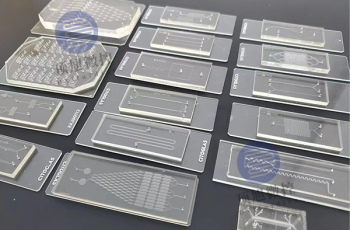
Suitable for cell culture, drug screening, cell capture and other related chip manufacturing, the material itself is hydrophobic in nature and can be surface modified by chemical or physical means.

Dual Flow Channel Design Organoid Chip An advanced organoid chip technology inspired by the concept of organoid chips, it consists of two independent channels that support 2D and 3D cell cultures to mimic physiological environments, especially in the study of the effect of fluid shear stress on gene expression in blood vessels.
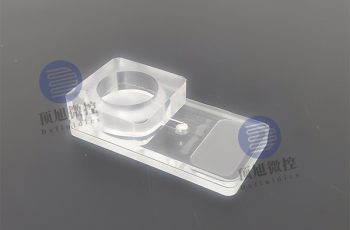
Sperm sorting chips represent an advanced technological tool designed specifically for reproductive therapy. Its core advantages include efficient selection of ideal sperm without the need for cumbersome sample preparation, as well as a standardized and streamlined operational process. This innovative chip combines optimized channel dimensions and incubation time to maximize sorting efficiency. Through this technology, high-quality sperm with attributes such as high motility, normal morphology, low ROS (Reactive Oxygen Species), and low DNA fragmentation can be quickly and accurately selected. The sperm sorting chip not only significantly reduces sample preparation time but also mitigates the impact of traditional centrifugation methods on semen quality, providing embryologists with an efficient and straightforward method to select the highest quality sperm, thereby enhancing the success rate of reproductive therapy.
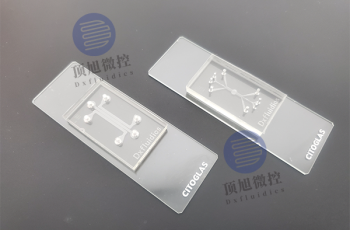
Cell migration, which refers to the movement of a cell after it receives a migration signal or senses a concentration gradient of some substance. During movement, the cell repeats the cyclic process of extending synapses/pseudopods anteriorly and then pulling on the posterior cytosol. The cytoskeleton and its binding proteins, as well as the intercellular matrix, are the material basis for this process, which is finely regulated by a variety of other substances.

Cell culture microarrays, also known as cell chips or microfluidic cell culture chips, are an innovative tool in the field of cell biology that is changing the landscape of cell research and medical applications in unprecedented ways.

The Nucleic Acid Mass Spectrometry Chip (SpectroCHIP Array) is an advanced biochip technology primarily applied in genomics research and DNA sequencing. This chip features highly integrated functions, enabling simultaneous gene sequencing of multiple DNA samples on a single chip. Utilizing high-throughput optical detection technology allows efficient and precise analysis of DNA fragments. Its design addresses the need for high automation, enabling users to acquire large-scale genetic data more rapidly and reliably. This technology finds extensive applications in disease research, personalized medicine, and bioinformatics, playing a crucial role in advancing genomics research and DNA sequencing. The innovative design of the Nucleic Acid Mass Spectrometry Chip makes it a highly acclaimed technology in the current field of gene sequencing.

A 3D cell culture chip is a biotechnology tool used to simulate and study three-dimensional cell growth environments in the laboratory. Traditional cell culture is usually performed in a 2D petri dish, but this method cannot accurately simulate the 3D growth of cells in the human body.

惯性流分选技术是近年来出现的研究热点,其主要特征是可以依靠惯性作用来实现微通道中颗粒的聚焦流动,而无需施加其他外力。 该方法的装置简单,容易加工和制作,而且无需外加机械或电子部件,体积小,易于集成。 其次,惯性流聚焦需要较高流速才能实现,所以该方法处理通量高,并且无需对细胞进行标记,细胞的活力不会受到损害这些优点使得众多的研究者投入到惯性分选方法中。 惯性分选系统设计 基于惯性技术设计了一个螺旋结构微流控惯性分选芯片,根据细胞几何特征进行高速惯性分选,整体结构如图2.1所示。 图2.1惯性分选系统结构图 惯性分选系统主要包含高速惯性分选芯片、样品驱动模块、显微镜观测模块以及计算机图像采集和处理…





 ZH_CN
 EN