Chip
Top Asahi provides various microfluidic chips, microfluidic chip processing equipment and microfluidic commonly used consumables, and we also provide professional microfluidic chip customization services.
Top Asahi provides various microfluidic chips, microfluidic chip processing equipment and microfluidic commonly used consumables, and we also provide professional microfluidic chip customization services.

Microfluidic plastic chips are an innovative technology for fluid manipulation and analysis at the microscale, widely applied in biomedical, chemical analysis, and laboratory research fields. To achieve mass production of these microchips, injection molding technology is extensively employed, providing an efficient, precise, and cost-effective solution for their manufacturing.
More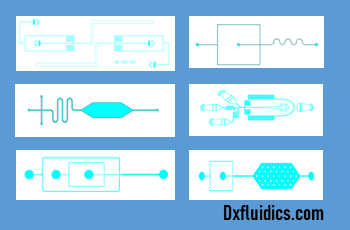
Droplet Microfluidics is a microfluidic technology that manipulates and controls liquid droplets at the micrometer scale for various biological and chemical experiments. Integrating knowledge from microfluidics, chemical analysis, and biology, this technology offers advantages such as high integration, automation, high throughput, and low cost, opening new possibilities in laboratory research and clinical diagnostics. In this article, we will provide a detailed overview of the basic principles, applications, advantages, and challenges of droplet microfluidic chips.
More
The Spiral Cell Sorting Chip is an innovative forefront microfluidic technology. Its unique design incorporates a spiral-shaped microchannel, enabling efficient continuous separation of suspended particles or cells by adjusting fluid velocity and spiral structure. This technology, renowned for its outstanding sorting efficiency, compact device size, and flexibility, finds extensive applications in cell sorting, particle separation, and biomedical research. This article delves into the principles, design features, and application areas of the Spiral Sorting Chip, with a particular focus on its significance in capturing circulating tumor cells (CTCs) for cancer research.
More
The Step-Emulsification Chip is a microfluidic chip technology widely used in droplet microfluidics. Utilizing advanced emulsification techniques, it creates a step-like structure through layered formation, allowing efficient control and precise manipulation of droplets. This article delves into the technical principles, fabrication methods, application areas, advantages, challenges, and future prospects of Step-Emulsification Chips.
More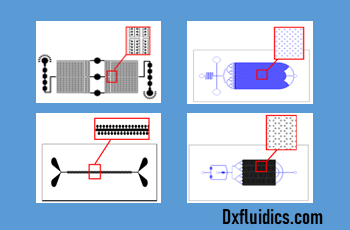
In the ever-evolving field of biomedical technology, the single-molecule RNA analysis chip (amplification-free) has emerged as an advanced tool for biological analysis, garnering widespread attention. In comparison to traditional RNA analysis methods, the unique feature of no amplification and the high sensitivity to individual RNA molecules offer novel possibilities for early disease diagnosis and treatment. This article delves into the technical principles, application areas, advantages, challenges, and future prospects of the single-molecule RNA analysis chip.
More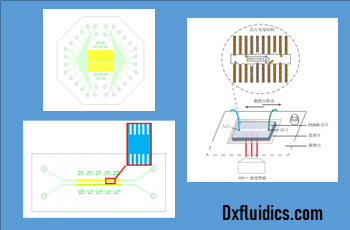
Microfluidic mother machine chip is an advanced biochip technology that integrates microfluidics and cell biology, aiming to simulate and study various stages of mother cells in the cell cycle and related molecular and biological processes. This technology utilizes microstructures such as microchannels, microreactors, and microvalves for highly precise manipulation and observation of mother cells at the microscopic scale. The following is a detailed overview of the mother machine chip, covering its principles, applications, advantages, and potential impact on cell biology and medical research.
More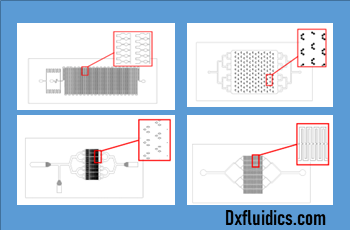
Cell capture chips represent an advanced application of microfluidic technology widely employed in biomedical research, medical diagnostics, and life sciences. This technology achieves efficient capture, positioning, and analysis of cells through intricate fluidic channels and functional surface structures. This article provides a detailed overview of the principles, application areas, advantages, and future trends of cell capture chips.
More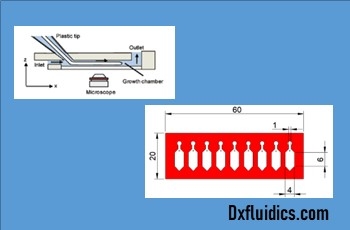
Plant microfluidic chips are increasingly important tools in the field of plant science, with applications spanning plant growth, plant physiology, and plant stress responses. These chips leverage microfluidic technology to finely control and analyze plants through microchannels and microreactors, providing a novel approach to studying plant growth and development, metabolic processes, and plant responses to environmental changes. The following is an overview of plant microfluidic chips, including their principles, applications, advantages, and potential contributions to plant science research.
More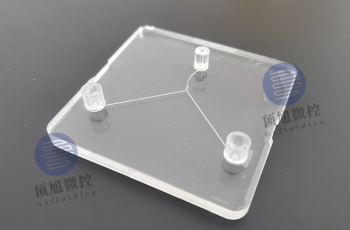
The Lipid Nanoparticle Chip (LNP Chip) is an advanced technology widely used in the field of nanotechnology. It is designed based on the unique structure of lipid nanoparticles to achieve efficient drug delivery and biomedical research. This article will delve into the principles, structural design, performance characteristics, and applications in drug delivery and biomedical research of the Lipid Nanoparticle Chip.
More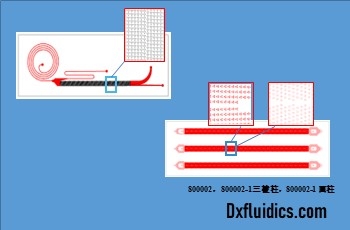
微流体技术的不断进步推动了生物芯片领域的发展,其中DLD(Deterministic lateral displacement)分选芯片作为一项创新技术,为细胞分选领域带来了新的可能性。 本文将详细介绍DLD分选芯片的原理、优势、应用领域以…
More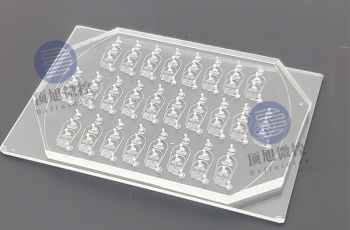
Microfluidic droplet sequencing chip is an advanced biochip that combines microfluidic technology with high-throughput sequencing technology. Its core principle involves creating tiny droplets within the chip through microfluidics, where each droplet serves as a microreactor, enabling large-scale, high-throughput genetic sequencing on a single chip.
More
The microfluidic lung chip/lung on a chip is a miniature experimental platform designed and manufactured based on microfluidics technology to simulate the structure and function of the lungs. It consists of a series of microchannels, chambers, and cell culture membranes, creating a micro-organ that can replicate physiological and pathological processes such as respiratory movements, oxygen and carbon dioxide exchange, and immune responses in the lungs. By introducing different types of cells, viruses, bacteria, and drugs into the chip, it is possible to simulate lung diseases and conduct drug screening.
More




 ZH_CN
ZH_CN  EN
EN